Zelda Goldman
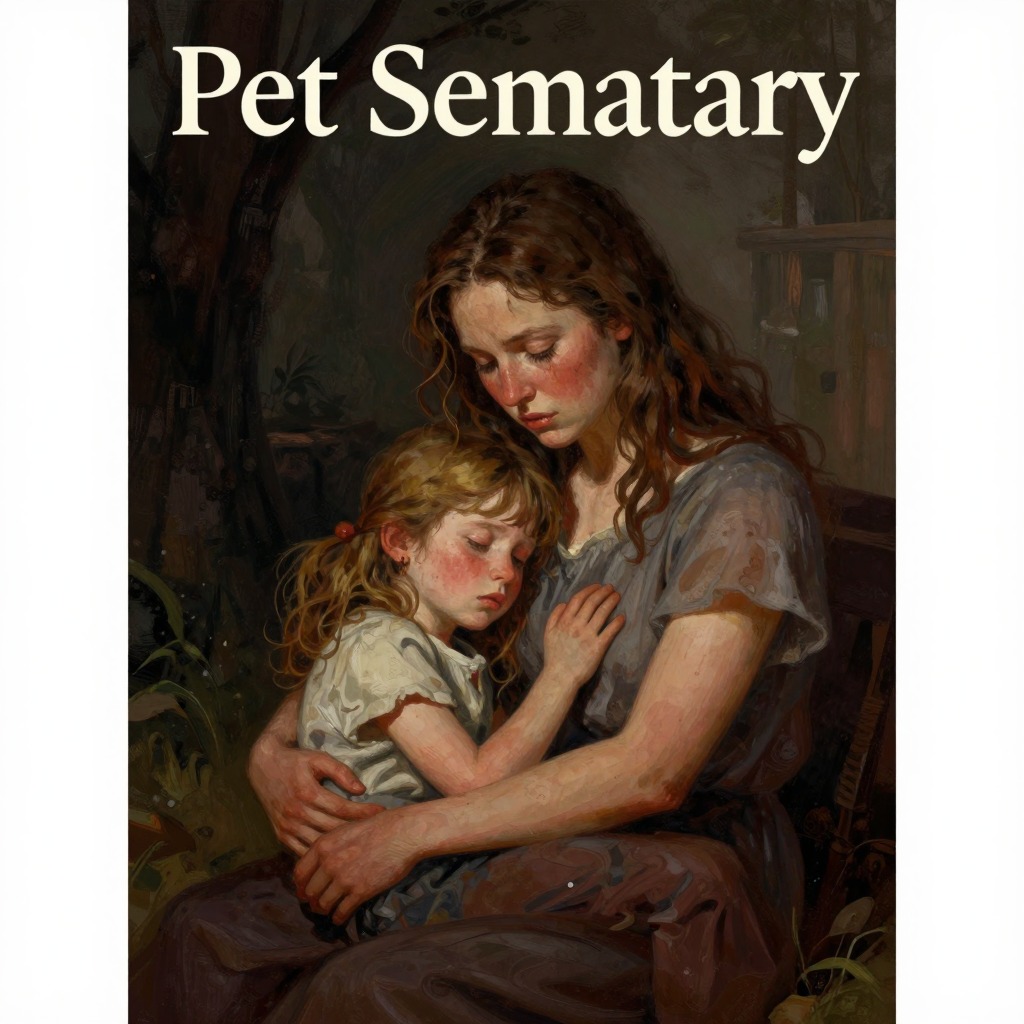
Zelda Goldman is the deceased older sister of Rachel Creed, a figure whose agonizing death from spinal meningitis when Rachel was eight years old functions as the psychological wound that defines Rachel's adult character. Though Zelda never appears alive in the novel's present timeline, her memory is a constant, corrosive presence—a secret that Rachel has kept buried for decades and that erupts into the narrative as the hidden source of her terror of death, her fierce protectiveness of her children, and her explosive arguments with Louis over the Pet Sematary.
Identity and Background
Zelda was two years older than Rachel, and the Goldman family's first daughter. She contracted spinal meningitis, a disease that slowly destroyed her body and mind. The illness left her bedridden, in constant pain, and progressively deformed: her back twisted and hunched, her hands curled into claws, and her face pulled into a mask of suffering. The family kept her in a back bedroom, a "dirty secret" as Rachel later describes it, and the room always smelled of urine and the Wild Cherry cough-drop scent of her medications. There are no pictures of Zelda in the Goldman house anymore, except for one in Irwin Goldman's study and one Dory Goldman carries in her wallet—a visual erasure that mirrors the family's emotional suppression of the trauma.
Life and Trajectory
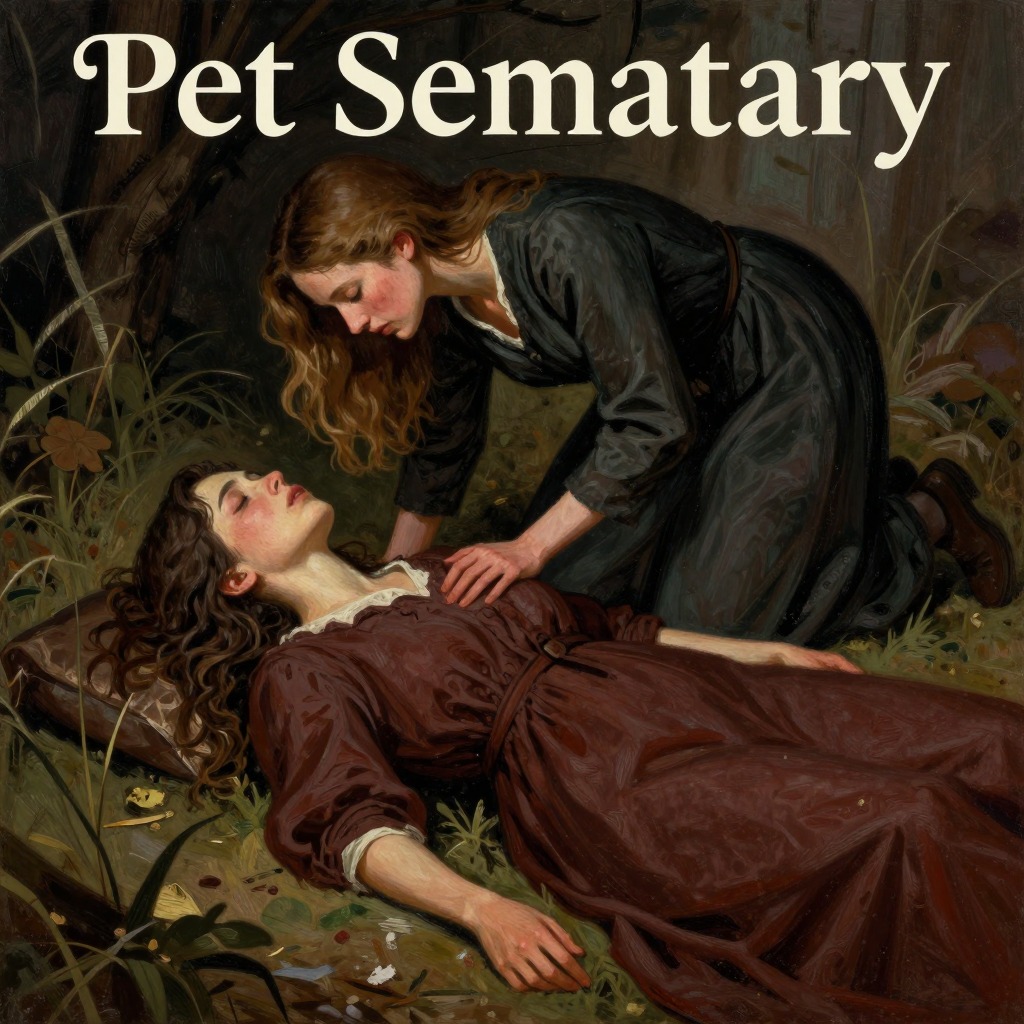
Zelda's illness was long, ugly, and painful. As her body degenerated, her personality also changed; she became demanding, hateful, and deliberately cruel. She would refuse the bedpan and then wet the bed, forcing her mother and Rachel to change the sheets, and Rachel could see "the smile in her eyes" when she did it. Near the end, the drugs stopped working, and Zelda screamed constantly. The family's wish for her death—a wish Rachel shared and has never forgiven herself for—became a source of profound guilt. Zelda died on April 14, 1965, when Rachel was alone with her. Her parents had gone out for a brief visit during Passover, leaving eight-year-old Rachel in charge. Zelda began to convulse and choke; Rachel, terrified, turned her over and thumped her back, but Zelda died. Rachel's first thought was "Oh good, finally, Zelda's choking and this is going to be over," a thought she has never been able to forget or forgive herself for. She ran from the house screaming "Zelda's dead!" and later realized she might have been laughing, not crying.
Relationships and Conflict
Zelda's relationship with Rachel was poisoned by the illness. Rachel believed Zelda hated her because Rachel's back was straight, because she had no pain, because she could walk, because she was going to live. Rachel imagined Zelda wanted to kill her or take over her body. After Zelda's death, Rachel developed a psychosomatic back sprain from the effort of trying to help her sister, and she became convinced that Zelda had given her spinal meningitis from beyond the grave as revenge. This belief persisted for years, and Rachel suffered nightmares in which Zelda would lurch out of closets, blue and twisted, her eyes rolled up to shiny whites, her black tongue puffing out, her hands hooked into claws. The trauma was so severe that Rachel has never attended a funeral since Zelda's, and she cannot bear to discuss death or even think about it. This phobia directly causes the bitter argument with Louis after Ellie's first visit to the Pet Sematary, when Rachel refuses to let their daughter confront the reality of mortality.
Change and Ending
Zelda's death is the fixed point around which Rachel's entire emotional life revolves. The novel's climax brings Zelda back not as a ghost but as a psychological weapon: the resurrected Gage, possessed by the evil of the Micmac burying ground, uses Zelda's voice and appearance to torment Rachel before killing her. When Rachel arrives at Jud Crandall's house, she sees a small, twisted figure in Gage's burial suit and initially believes it is Zelda, come back to "twist your back like mine." The figure's face then resolves into Gage's, but the identification is complete: the Wendigo-tainted resurrection has merged the two figures of Rachel's deepest trauma—the sister she failed and the son she lost. Zelda's legacy is not just a memory but a curse that repeats itself, using the same words and the same twisted form to destroy Rachel at the moment of her greatest vulnerability.
Narrative Role and Evaluation
Zelda Goldman is a classic example of what disability studies criticism calls "narrative prosthesis": her physical degeneration is used primarily as a symbolic device to generate Rachel's death phobia and to motivate the novel's central conflicts. She has no independent existence in the story; she is entirely defined by her illness and its effect on Rachel. Yet within that function, she is extraordinarily effective. Her story, told in Rachel's agonized confession to Louis late in the novel, is one of the most harrowing passages in the book, and it retroactively explains nearly every significant choice Rachel makes—her refusal to discuss death, her overprotectiveness of her children, her inability to attend funerals, and her final, fatal decision to return to Ludlow. Zelda is the wound that never heals, the secret that cannot be spoken, and the ghost that finally, through the agency of the Micmac burying ground, comes home to claim its living sister.